How to budget for overseas remittances




My dad's second wife sent almost all she earned to her family overseas. She and Dad had a family in Sydney, but she was under pressure to support her family. It was a cultural duty Dad understood to an extent.
But there were times when my father was furious about how her family constantly asked for money. It became a source of tension in their relationship.
It was hard for Dad to see it from her perspective. He helped his own extended family and was good to his ageing parents but he put his immediate family first. He wanted his wife's salary to go towards school fees and household bills, but her support was vital for her family who lived in a rural village.
Balancing act
How do you manage the demands of an overseas family? The conventional advice is to be transparent and budget for overseas family gifts or remittances, as they are called. This way everyone knows the rules about how much is sent overseas: there are no secretive payments that may be discovered by partners and everything is out in the open. But it isn't easy when the overseas family applies emotional pressure because of an unforeseen event.
And there were plenty of emergencies: her parent's house needed repairs after storms and her own father, a diabetic, had an emergency operation to amputate his legs. He needed constant medical care, medicines and a wheelchair. Her sisters and brothers asked her to pay the education costs for her nieces and nephews as well as graduations and confirmations. There weren't any extravagances, she was paying for housing, healthcare and education.
But to meet her family's demands, she continually asked Dad for more money to help her family.
One of the justifications for the pleas from her family when they asked for her financial help was that my dad earned more in a month than her brothers earned in a year. They didn't always understand that the cost of living is high in Australia.
My dad and his second wife were worlds apart when it came to money. She had very little when they met and to her it seemed that my father had an enormous amount. The mechanics of the mortgage weren't a priority for her, nor were the interest repayments on credit cards. For example, she couldn't understand why they didn't drive a Mercedes. Dad, who believed a car got you from A to B, told me there were daily tears as she demanded a Mercedes.
"She'll get a bloody Mercedes when I die," he told me. It was one of the first things she did when the probate came through. A couple of years later she was driving it for Uber because she had lent all her money to her family to buy a fishing boat and it hadn't worked out.
While my dad loved his second wife, he did worry about what she would do with the money he left her.
At an all-time high
Marrying someone with overseas commitments that they prioritise can tear a marriage apart.
One woman I know whose husband is from overseas is exhausted by a scandal surrounding his family's property overseas due to his brother's skulduggery. To him it is the most important issue and he needs a lot of money to fix it. It is the second time he has bailed out his brother. He has asked her for serious money, and she is horrified. It is affecting their relationship.
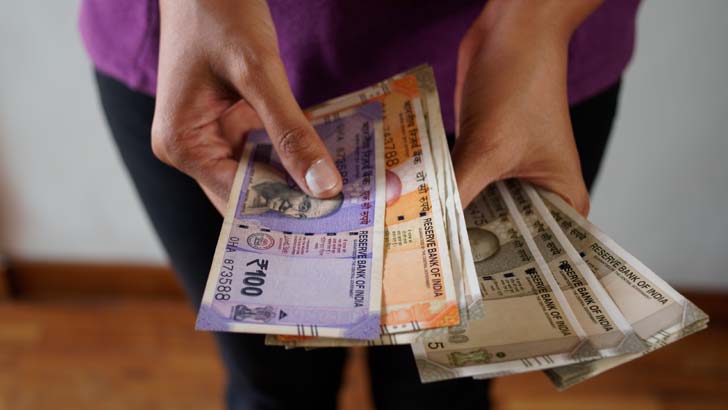
Yet so many families are juggling obligations and demands from relatives overseas. Money sent overseas hit a record $38.2 billion in 2024. The top two destinations for remittances are $7.3 billion to India and $5.35 billion to China, according to new analysis by comparison site Money Transfer Australia.
The findings draw on figures from the World Bank, the Australian Bureau of Statistics, the Global Knowledge Partnership on Migration and Development, and the Department of Foreign Affairs and Trade.
I've known women and men who come to work in Australia and leave their children behind for years to be raised by family, while they send money home. They miss important milestones in their children's lives as well as their parents' illnesses and funerals.
Certain migrant communities in Australia send disproportionately high amounts abroad. Money Transfer Australia found that Israelis send a substantial $36,025 per migrant annually - the highest remittance per capita, reflecting likely investments or wealth transfers rather than traditional family remittances.
France also stands out, with a migrant population roughly 3.5 times the size of Israel's, yet still sending home an average of $24,237 per capita. In contrast, migrants from Papua New Guinea sent the least at $82. Migrants from Lebanon, Austria and Egypt also remit substantial portions of their income.
Some countries are heavily reliant on money being sent from Australia, with Vanuatu receiving 66% of its total remittance inflows from Australia, followed by Tuvalu (49%), the Solomon Islands (45%) and Fiji (35%).
Money transfer need-to-know
The business of transferring money overseas is highly competitive and it pays to shop around for the best deal on fees and currency rates.
The Australian Competition and Consumer Commission's (ACCC) updated Foreign Currency Conversion Services inquiry in 2024 found that the big four banks were often more expensive than other suppliers for buying foreign cash and international money transfers.
For common currencies, such as US dollars and British pounds, the ACCC found the big four banks were rarely the cheapest option.
The ACCC explains that some commercial comparison websites are not independent and suppliers can pay to promote their services on the site, while others do not include all services, so they're not comparing all options.
Check the two government-funded comparison websites for international money transfers. They compare prices of services available to Pacific Island and several South-East Asian countries:
• SendMoneyPacific
• SaverAsia
There are about 900 different independent remittance businesses registered with AUSTRAC. Consumers can check whether a money transfer provider is registered by searching AUSTRAC's remittance sector register.
"If a business is not registered, think twice about using its services," says Brendan Thomas, CEO of AUSTRAC.
Get stories like this in our newsletters.